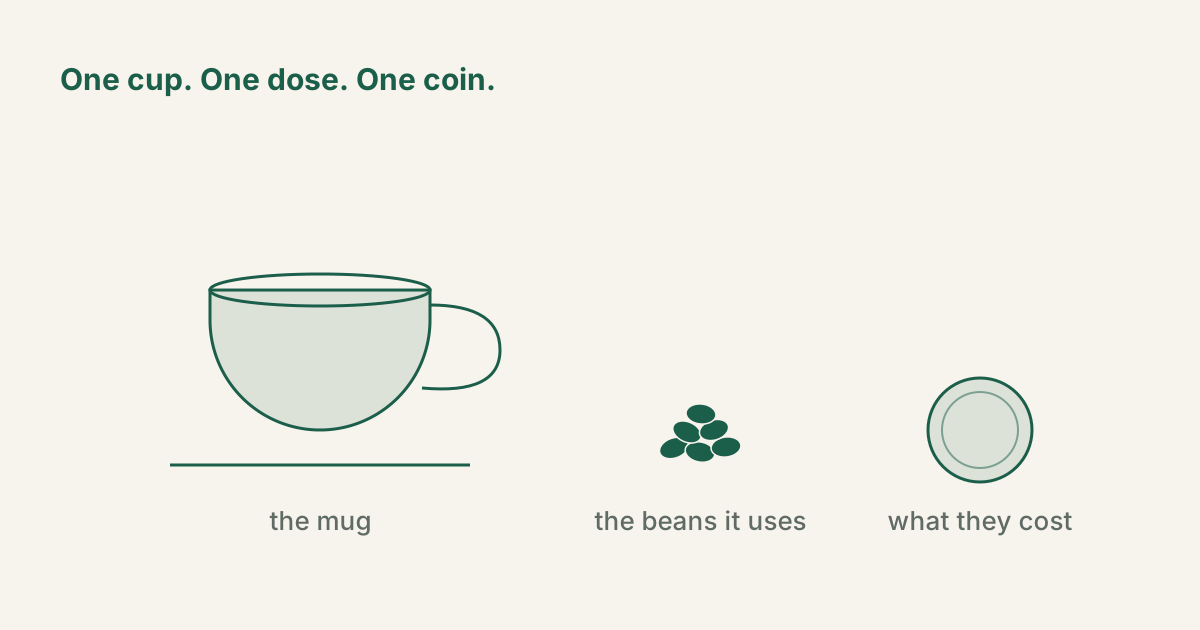
Using the middle price of the speciality coffee on this site, £38.00/kg, a cup made with 15 g of beans costs about 57p in coffee. An espresso made with an 18 g dose costs about 68p. That is the coffee alone: milk, water, energy and the machine come on top.
How the figure is worked out
A kilo is 1,000 g, so the cost of a cup is the price per kilo times the grams you use. 15 g is a common dose for one mug from a cafetière or a filter. 18 g is the usual dose for a double espresso. The price is the median of 17,886 coffees we could price, read from roasters’ own shops on 13 November 2026.
| Brew | Beans used | At the median price (£38.00/kg) | At the standard-bag median (£47.80/kg) |
|---|---|---|---|
| Filter or cafetière mug | 15 g | 57p | 72p |
| Double espresso | 18 g | 68p | 86p |
| Cafetière for two | 30 g | £1.14 | £1.43 |
There are two columns because there are two honest prices. The median uses whichever bag is cheapest per kilo, often a 1 kg bag; most people buy a 250 g bag, which costs more per kilo, and the standard-bag column prices the same cup on that basis.
What changes the answer
- The coffee you buy. Half the coffees here cost more than £38.00 a kilo and half cost less. The median itself states what was counted and when.
- The bag size. A 1 kg bag usually costs less per kilo than a 250 g bag of the same coffee. Why a bigger bag costs less puts a figure on it.
- Your dose. Stronger mugs use 18 to 20 g, and a moka pot uses about 15 to 20 g depending on its size.
- Waste. Coffee past its best that goes in the bin raises the real cost of every cup you did drink.
What this does not tell you
It is not a judgement about which coffee is better. Bean Clarity compares prices; it does not rank coffee by quality. It also leaves out milk, which in a latte can cost more than the coffee.
Next
To see coffees by price per kilo, open the catalogue sorted cheapest first. For how the price per kilo is read, and what we do when a roaster does not state a bag size, see what speciality coffee should cost.